How Interior Materials Perform Under Fire Conditions

The interior materials not only affect the appearance but also the safety standards in the built environments. Fire performance is now a serious issue for homeowners, architects, and commercial planners. The choice of the appropriate material may minimize risk in case of unforeseen events. This change in consciousness has led to more focus on solutions such as Firewall Technology. Fire Retardant Plywood Materials provide quantifiable resistance that can be used to support safer interiors without undermining design intent.
Surface appearance does not determine fire performance. It is based on the reaction of a material to heat and flame. Certain materials burn fast, and others retard the spread of the fire. Knowledge of these reactions enables decision makers to make responsible choices. Firewall Technology deals with this issue by structural treatment in the plywood core. Consequently, Fire Retardant Plywood is a viable option in interior design that needs extra security.
The importance of Fire Performance in Interiors:
The interior of residential and commercial buildings has several combustible components, including furniture, wiring, and decorative finishes. Fire can spread faster than evacuation can occur when materials ignite quickly. Thus, the choice of panels that are resistant to ignition becomes a significant preventive action. Firewall Technology is meant to slow down the spread of flames and decrease the intensity. Fire Retardant Plywood has a better reaction time when compared to untreated panels in controlled testing conditions.
Fire safety standards in different regions are increasingly promoting the use of certified interior materials. Constructors are supposed to comply with certain standards concerning the spread of flames and smoke formation. Firewall Technology is a technology that is integrated into materials that are designed to meet these changing standards. This makes sure that Fire Retardant Plywood not only works in the installation process but also meets the long-term safety expectations. Compliance gives assurance to property owners and occupants.
The mechanism of Fire Retardant Treatment:
The performance of fire resistance starts at the manufacturing level. The plywood layers are treated with chemicals to improve resistance properties. This internal change enables the panel to respond differently to heat. Firewall Technology does not promote rapid combustion but rather slows down ignition and slows down the movement of flames. Fire Retardant Plywood, therefore, has a longer structural stability in the face of fire.
The handling or installation of the board is not significantly changed during the treatment process. Carpenters and contractors are able to cut and assemble panels in ways that are familiar. Although this is convenient, the internal structure still promotes safety goals. The Firewall Technology is integrated into the core, and the performance is uniform across the panel. This renders Fire Retardant Plywood appropriate in cabinetry, partitions and wall panelling in residential and commercial interiors.
Performance Beyond Ignition Resistance:
Fire safety does not just mean postponing flames. The overall risk is also affected by smoke generation and heat release. Materials that minimize these factors help to provide safer evacuation conditions. Firewall Technology panels are designed to restrict the spread of flames quickly and preserve the structural integrity. Fire Retardant Plywood exhibits a controlled response in controlled situations compared to traditional substitutes.
The other factor is the load-bearing capacity under heat. The structural elements must be robust enough to prevent collapse. Firewall Technology increases the time of resistance, although there is no material that is completely resistant to extreme fire conditions. This period can be utilized to support evacuation and emergency response. Fire Retardant Plywood is used by designers in interior structures to offer layers of protection in the space constructed.
Combining Safety and Design Requirements:
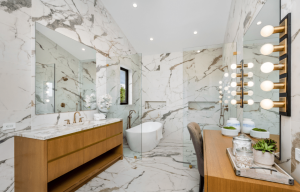
The interior design is becoming more and more balanced between aesthetics and performance. Clients do not wish to sacrifice aesthetics to meet safety standards. Firewall Technology on materials enables designers to be creative and, at the same time, deal with fire issues. The surface may be finished or laminated as per design themes without compromising its protective role. Fire Retardant Plywood is thus helpful in structural safety as well as decoration.
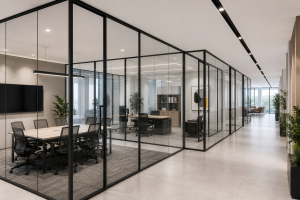
Fire-rated materials are commonly suggested in high-occupancy areas in commercial spaces like offices, retail outlets, and hospitality projects. The use of Firewall Technology in partitions and furniture panels enhances the overall risk management. Meanwhile, Fire Retardant Plywood does not lose the familiarity and workability of quality plywood. This balance promotes broader use in modern projects.
A Responsible Direction for Modern Construction:
Awareness around fire performance continues to grow among property developers and homeowners. Prevention remains more effective than reactive measures. By selecting panels developed with Firewall Technology, stakeholders demonstrate commitment to responsible construction practices. The inclusion of Fire Retardant Plywood within interior planning reflects a proactive approach rather than a reactive correction.
Fire performance should be evaluated alongside durability, moisture resistance, and structural reliability. Materials must contribute holistically to interior safety. With engineered resistance built into its composition, Firewall Technology represents a focused response to modern fire concerns. When integrated thoughtfully, Fire Retardant Plywood becomes part of a comprehensive safety strategy within homes and commercial environments.