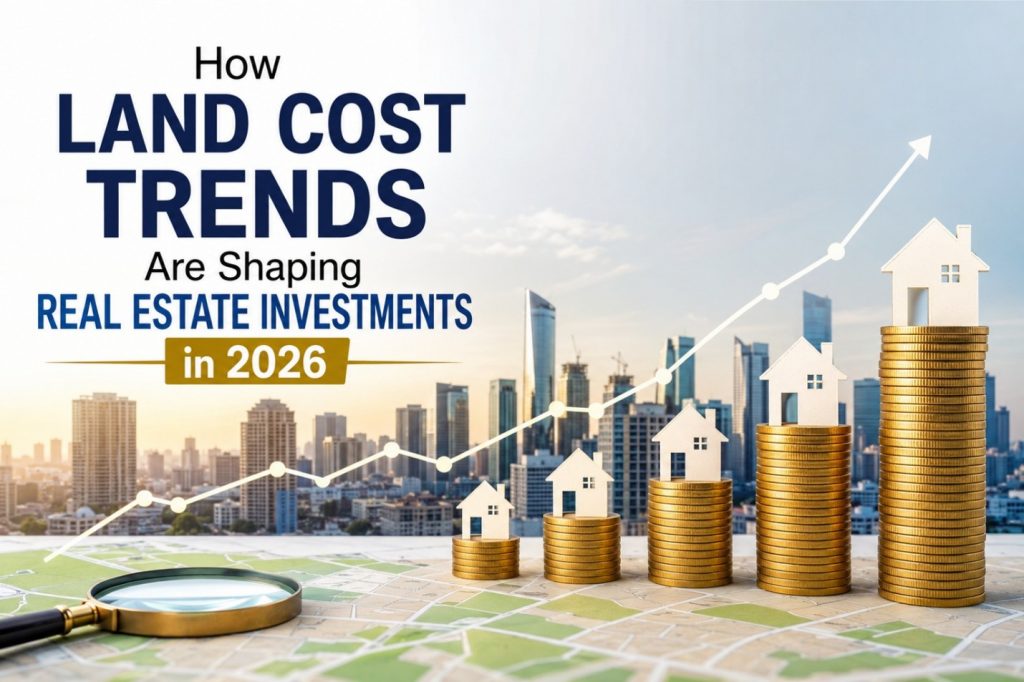
How Land Cost Trends Are Shaping Real Estate Investments in 2026
Introduction
It comes as no surprise in 2026 that the real estate industry keeps shifting to some key trends and factors that can affect most investment decisions, and among them, it’s worth noting the importance of land costs. Whether it is for commercial projects, industrial sites, industrial parks, residential projects, or mixed-use buildings, the value of land continues to determine project viability, costs, and expected returns. Investors and buyers are keen to analyze land cost trends because they have a direct influence on housing and commercial property values, budgets for the built and operational environment and investment viability. Given the continued growth of populations in urban centers and the increase in demand for sites at privileged locations, it’s possible that land prices will continue to increase across various areas.
Why Land Costs Matter in Real Estate
4. Cost of Land Being a scarce commodity, land represents one of the highest values in real estate assets. The best part is that unlike the concrete structures on the land which would eventually depreciate with the passage of time, land trends to appreciate in value. This is more applicable where land is in demand as a result of rapid industrialisation and growing infrastructure in any locality.
Increasing land value means the land developer would have a much higher investment to make and it’s natural that these costs shall be eventually borne by the buyer of the property or commercial tenant. Thus investors well-acquainted with the local land value shall have a clear idea of potential investment risks and their eventual returns. 2026 Demand for residential communities, logistics hubs and retail spaces has seen the cost of land rising considerably making investors reconsider strategies and analysis on land purchase cost.
Key Factors Driving Land Cost Trends in 2026
1. Urban Expansion and Population Growth
The population is growing in most of the cities and this increases the job openings too thus leading people to migrate in cities for jobs. Due to increasing the need for living as well as working spaces, the land is a scarce commodity now and more people are fighting for few available plots. In the cities which have become too congested, the areas in suburbs and development zones are more appealing to the investors for higher return value later on.
2. Infrastructure Development
These investment by government on infrastructure projects like transit systems, highways, metros, smart city developments have greatly impact on the valuation of land. Proximity of locations towards new infrastructure developments is one factor that contributes to higher valuations. Properties in areas near to planned projects (but yet to be executed), attract a lot of investors due to anticipated potential growth after the development is completed.
3. Industrial and Logistics Growth
4. Regulatory Changes
How Rising Land Costs Impact Investors
Higher Entry Costs
With immediate impact, one is a higher investment barrier. There is no longer as many resources in hand when entering and purchasing properties in the best places of land where one desired to put their money. Thus, this leads many investors to the next tier of city and undeveloped country that offers lower land prices but with significant potential.
Reduced Development Margins
Developers also need to balance cost of acquisition versus potential proceeds from the sale of properties. If prices grow quickly for some reason, margins on developments can be squeezed unless property prices grow correspondingly. As a result, developers have increasingly turned to careful planning and new ways of constructing buildings.
Greater Focus on Long-Term Value
Investors looking for potential for sustained capital growth, rather than rapid returns are actively targeting development sites. The impact of a new route of transport, or a growing economy or population is an ever more important factor when land is viewed as a long term asset investment.
Emerging Opportunities in 2026
A number of investment options still available may spark some investor interest.
Suburban Development
Mixed-Use Projects
Affordable Housing Initiatives
There’s ongoing collaboration between governments and developers to confront housing affordability. Investors in affordable housing developments may be attracted by incentives and escalating demand.
Sustainable Real Estate
Environmental considerations are influencing property development strategies. Green buildings, energy-efficient communities, and environmentally responsible planning are becoming important factors in land valuation and investment decisions.
Strategies for Real Estate Investors
Conclusion
Land prices continue to play an integral role in how real estate investments in 2026 unfold as urbanization, development, industrialization and changes in regulatory approaches impact values in land across the globe. Rising land prices, although imposing, also offer unique opportunities for those equipped to invest in their knowledge of market developments. To prepare for land price shifts, investors could look towards: Emerging regions Sustainable projects The factors driving long term land value and growth.