Why Ahmedabad Is Emerging as a Top Real Estate Investment Destination
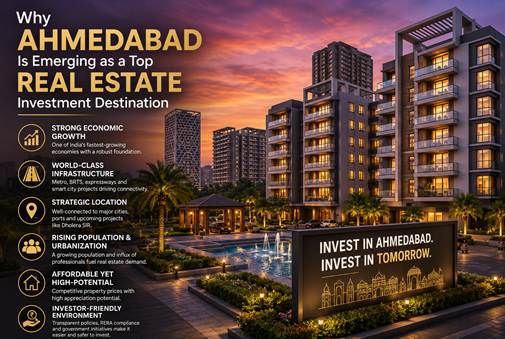
Few years back, if you told someone you were buying property in Ahmedabad as an “investment,” they’d just nod and change the topic. Mumbai, Bangalore, Gurgaon — those were the cities everyone got excited about. Ahmedabad was the safe option. Fine for living in, not really something you brought up at a dinner party.
That’s changed a lot now, honestly.
I’ve been watching this happen for a while — talking to brokers, going for site visits I probably didn’t need to go for, and yeah, kicking myself over a couple of plots I didn’t buy when I had the chance. SG Highway has more cranes than I can keep count of these days. South Bopal barely looks like the same place it did five years back. And the question has shifted too. People aren’t asking “why Ahmedabad” anymore, they’re asking “which part of Ahmedabad.” Small thing, but it tells you a lot.
So let’s talk about why this is happening, and why it might matter if you’re someone currently looking at flats for sale in Ahmedabad.
It’s Not Just Textiles Anymore
Ahmedabad and textiles, sure, old story. What’s different is everything that’s piled on top of that now — pharma companies expanding, auto ancillary units coming up, and a slow but steady stream of IT and finance companies that honestly nobody expected here a decade back.
GIFT City gets a lot of credit for this, and it deserves most of it. It’s technically not even in Ahmedabad — it’s on the way to Gandhinagar — but the effect on Ahmedabad’s housing demand is hard to miss. Banks, fintech companies, consulting firms, all hiring steadily, and most of those people don’t want to actually live inside GIFT City. They want a flat in Ahmedabad. Somewhere that feels like an actual neighborhood, has a school nearby, a market you can just walk to. So a good chunk of that job growth ends up showing up as housing demand here instead.
You can see this in launch numbers too, if you bother to check. Builders don’t put up towers on a hunch. They build where people are actually buying. And right now a big share of new launches are happening in the western part of the city — which says builders are betting big on that demand sticking around.
The Infrastructure Talk Is Actually Backed By Something
Every city in India claims it’s “transforming” through infrastructure. Most of the time that just means dust, barricades, and traffic diversions for three years with nothing much to show. Ahmedabad’s one of the few places where I’d say, yeah, this is actually visible and it’s working.
The metro extension hitting Motera, Gandhinagar, and the area near GIFT City changed how people think about distance here. A locality that felt too far two years back doesn’t feel far anymore once there’s a metro station near it. Chandkheda and the stretch near Infocity and Koba Circle are seeing some of the fastest price jumps in the city right now, and a lot of that is the metro line doing its job.
Then there’s the roads — SP Ring Road, SG Highway, Sindhu Bhavan Road — quietly keeping things connected without sending everyone through the old city traffic. And somewhere down the line there’s the Mumbai-Ahmedabad bullet train too, which, even years before it’s actually done, is already changing how people think about the western side of the city.
Throw in the Commonwealth Games 2030 prep — Ahmedabad’s in the running to host parts of it — and you’ve got a city government spending ahead of where the population actually is right now. That’s usually a good sign for property prices later, not a bad one.
The Math Still Makes Sense Here
Here’s the bit that surprises people who haven’t actually shopped for a flat here recently: Ahmedabad is still cheap. Not “cheap for a metro city” cheap. Actually cheap.
Even the premium areas — Satellite, Prahlad Nagar, that whole zone — sit at price points that would barely count as mid-range in Mumbai or most of Bangalore. That gap is exactly why people who bought into Shela, South Bopal, or near Vaishnodevi Circle a few years ago are sitting on decent gains today. Brokers I’ve spoken to say buyers are now looking even further out, simply because those areas have already gotten closer to their ceiling.
Rental yields, though, I won’t oversell this part. You’re looking at somewhere around 3 to 5 percent depending on the area, which is lower than Pune but better than Mumbai’s tighter 2 to 3 percent range. Not amazing numbers, but steady ones. And steady rent plus room left to grow on price is a combo that’s getting harder to find anywhere else in the country.
People Actually Need These Flats, Which Matters More Than It Sounds
It’s easy to get caught up talking about infrastructure projects and forget the basic question — who’s actually going to live in this flat?
Ahmedabad’s got a decent answer for that one too. There’s a strong student pull here, IIM Ahmedabad being a big part of it, bringing in students and visiting faculty every year. There’s also a growing name for healthcare in the city, which adds another set of people who need a place to stay for a while — either for treatment themselves or to be near family who’s getting treated.
That’s part of why Satellite and Thaltej keep pulling strong rents for decent apartments, while cheaper spots like Chandkheda and Gota pick up tenants who want to be close to the GIFT City corridor without paying premium-zone rent. Different crowd, different budget, but both keeping vacancy low.
So What Do You Actually Do With All This
I’m not going to sit here and tell you Ahmedabad’s some hidden goldmine about to make everyone rich. It’s not. Anyone promising you 50 percent returns in two years is selling you something, not telling you anything real about the market. What Ahmedabad actually has going for it is simpler — prices that are still reasonable, infrastructure spending that’s actually real, and demand coming from people with real jobs and real reasons to live here. Not speculation.
Before jumping in, though, be honest with yourself about what you actually want out of this. Rental income? Long-term gains? A bit of both? And how long can you realistically sit on this without needing the money back? Western areas like Satellite, Prahlad Nagar, South Bopal suit people who want stability and tenants who pay rent without drama. The newer corridors up north and east suit people chasing growth from a lower starting price, who don’t mind waiting a bit longer for it.
Either way, the best way to actually get a feel for this is to look at real listings, not just read articles about it. We’ve been tracking this market closely at Addressbox, and if you want to browse what’s out there right now, there’s a fair range of flats for sale in Ahmedabad worth checking before you settle on a budget or area.
Ahmedabad didn’t turn into an investment city overnight, and it’s clearly not done growing. If you’re willing to actually do some homework instead of chasing the next big headline, this is one of the more sensible property markets in India right now.