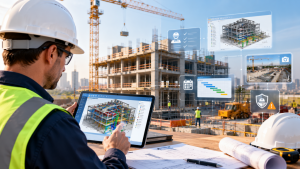
Why Mechanical BIM Modeling Is Essential for Modern AEC Projects.

Precision is not optional in modern building design it’s the baseline. Today’s high-performance structures rely on tightly integrated HVAC networks, intricate piping systems, and mechanical layouts where efficiency isn’t just a goal, it’s a requirement. For AEC teams the challenge isn’t just technical complexity; it’s delivering accurate, well-coordinated results under real schedule pressure.
Digital workflows have quietly become the backbone of how successful projects get built. And at the center of that shift? Intelligent 3D modeling is changing how mechanical engineers and VDC managers actually think about project delivery not just how they document it.
As explored in Revit Modeling Services for AEC Projects digital models carry far greater value than conventional drawings. Mechanical systems demand the same intelligent treatment that architectural and structural elements receive. This blog explores why mechanical BIM stands as a critical driver of success in modern AEC project delivery.
Understanding Mechanical BIM Modeling Services
Mechanical BIM is a smarter way to design and coordinate HVAC, piping and ductwork systems before a single pipe gets installed. Every component carries embedded data such as material specs, pressure ratings, flow parameters and how each part physically relates to everything around it. That layer of intelligence is what separates a BIM model from a simple drawing, and it’s what helps engineers catch problems early rather than on-site.
For AEC teams MEP BIM Services turn rough design intent into fully coordinated mechanical documentation. The kind that holds up under review and actually matches what gets built.
Core Features of Mechanical BIM Modeling
1. Parametric Families
When a design parameter changes pipe diameter, equipment size, load requirement. The entire model updates with it. Drawings stay consistent without anyone manually hunting down every affected view. It’s not a minor convenience; on complex projects this alone saves significant rework hours.
2. Automated Pressure Drop Calculations
Static head and pressure loss across duct and pipe networks get calculated instantly, giving engineers accurate data at every stage of system design.
3. Spatial Coordination
Every system occupies a defined position in 3D space, and the model flags physical conflicts with structural and electrical elements before they reach the field.
4. Volumetric Flow Analysis
Airflow rates are defined, adjusted, and verified directly inside the model environment keeping flow data tied to actual geometry throughout the process.
5. LOD 400 Detailing
Models reach fabrication-level accuracy, giving shop drawing production a reliable, precise foundation to work from.
6. Clash Interference Reporting
Across all disciplines the platform auto-generates interference reports delivering a clear picture of where systems overlap and where coordination requires attention.
7. Schedule Extraction
Material and equipment schedules generated directly from live model data.
How Mechanical BIM Differs from Traditional CAD
Traditional CAD delivers static geometry with zero embedded intelligence. Mechanical BIM embeds dynamic data that responds to every design decision. This distinction transforms how teams plan, coordinate, and construct complex mechanical systems from concept through completion.
Why Modern AEC Projects Depend on Mechanical BIM
Common Challenges in Mechanical Design
Mechanical engineers face spatial constraints on every large-scale project. Ceiling plenums, structural bays and fire protection systems compete for the same building envelope. Design to fabrication gaps cause operational conflicts and expensive field corrections. Teams operating in isolated workflows tend to produce documentation that drifts apart over time. Creating coordination gaps that surface at the worst possible moment: on site.
How Mechanical BIM Solves These Challenges
A single fully coordinated model becomes the anchor point for every routing and system decision. Every duct run, pipe connection, and equipment placement lives inside that shared environment visible, current, and consistent across all contributors. Stakeholders across design and construction pull accurate data from the same source throughout every phase. That shared foundation keeps documentation aligned and gives field crews the clarity they need to move with confidence on site.
Key Benefits of Mechanical BIM Modeling Services
Improved System Coordination
Cross-disciplinary coordination reaches a higher standard through shared BIM environments. Mechanical engineers, structural designers, and electrical contractors reference the same live model. Teams identify spatial conflicts early and resolve them before site work begins. This alignment reduces RFIs and improves overall project communication quality.
Clash Detection and Risk Reduction
Navisworks and Revit perform automated interference checking across all model disciplines. The software flags every instance where mechanical systems intersect structural or electrical components. Teams resolve these conflicts in the digital environment before construction begins on the floor. This process reduces field rework costs and project delays significantly.
Enhanced Design Accuracy
Parametric modeling holds the full mechanical system together as one connected whole. Adjust a duct size or shift a pipe route, and every associated drawing reflects that change instantly. LOD 400 tolerance management pushes component precision to fabrication ready levels giving the design a reliable path from detailed documentation straight through to physical installation.
Energy Efficiency and Sustainability
Thermal analysis and energy performance modeling run directly within the BIM environment zone by zone. Engineers run HVAC simulations against real building geometry and material data. Grounding each sustainability target in verified numbers. That accuracy supports LEED certification goals and helps operational costs stay controlled across the full building lifetime.
Fabrication and Installation Efficiency
Fabrication level spool drawings come straight from coordinated mechanical models, giving prefabrication teams precise dimensional data for duct and pipe assemblies well ahead of site mobilization. Assemblies built from that data arrive on site dimensionally accurate and ready for placement, compressing installation time and keeping material usage efficient.
Lifecycle Data and Facility Management
Each mechanical component in the BIM model holds manufacturer data, maintenance schedules, and performance specs within the Digital Twin. Facility managers draw on that living record for asset management and long-term operations decisions. Over the building lifecycle, that embedded intelligence strengthens maintenance planning and keeps systems performing with reliable consistency.
Time and Cost Savings
On complex projects, BIM mechanical coordination has driven field rework reductions of up to 40%. Fabrication drawings pulled from coordinated models give procurement a precise, waste-aware foundation. Automated scheduling and quantity takeoffs deliver consistent counting accuracy across all documentation, helping teams close projects faster with stronger cost and material control.
Mechanical BIM vs Traditional CAD: Why the Shift Matters
Limitations of Traditional CAD
Traditional CAD delivers static geometry with zero embedded data or system intelligence. Engineers update drawings manually each time a design decision changes in the project. Disconnected drawing sets across disciplines create coordination failures and documentation gaps. CAD files offer zero pathways to fabrication accuracy or long-term lifecycle data management.
Advantages of Mechanical BIM
Mechanical BIM creates dynamic intelligence that responds to every design and coordination decision. 3D visualization Services gives all project stakeholders a clear understanding of complex spatial relationships. Parametric updates cascade across all drawings instantly maintaining perfect documentation consistency. BIM environments connect design, analysis, documentation, and fabrication within one integrated platform.
Role of Mechanical BIM in Future Ready Construction
IoT integration transforms BIM models into live building performance monitoring platforms. AI-driven routing tools calculate optimal duct and pipe paths based on spatial constraints and flow requirements. Modular construction teams use BIM data to prefabricate complete mechanical assemblies offsite with precision. These advancements position Mechanical BIM as the foundational technology for next generation AEC project delivery.
Conclusion
Mechanical BIM delivers measurable value across every phase of AEC project delivery. It improves cross disciplinary coordination, accelerates fabrication, and provides lifecycle intelligence that traditional CAD workflows fail to match. VDC managers and MEP engineers who adopt digital mechanical workflows gain a clear advantage in project accuracy and cost performance. The highly detailed environment of Mechanical BIM supports smarter decisions from concept through operations, making it a core component of modern, high performance building delivery.