How BIM Improves Construction Site Management
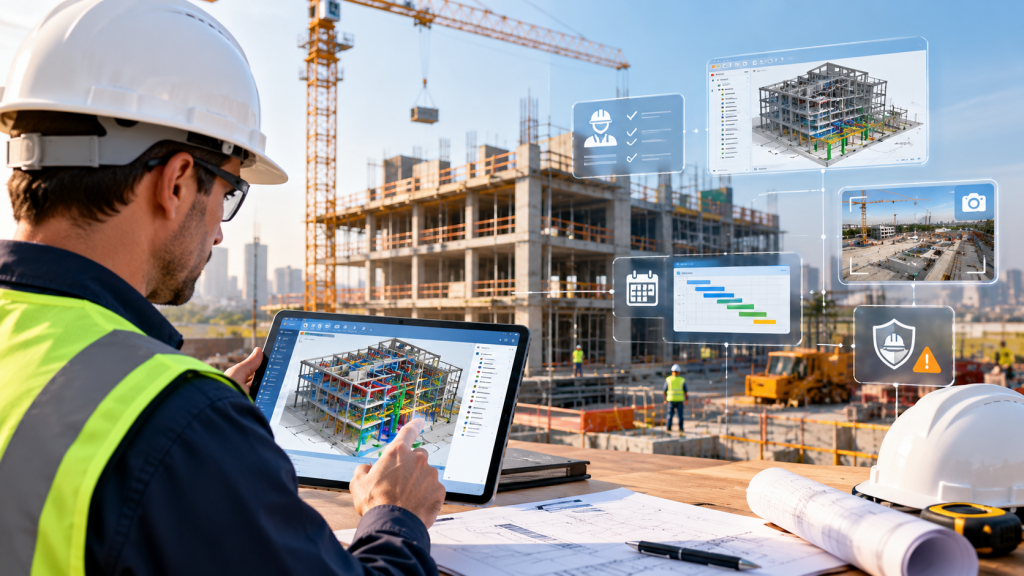
Over the years, architecture has adopted the latest methodologies that have altered the working approach for professionals. As we look at the industry today, BIM is a holistic technology for architects, designers, engineers, and other professionals. In the modern architecture and construction realm, BIM modeling services play a crucial role, especially in the innovative landscape of the industry. The significant concept of BIM in the architecture and construction industry enhances the process and brings efficient architectural outcomes.
Typically, the technology refers to a digital, 3D, intelligent data, data-rich model of the project that entails the physical and functional characteristics of the building. The building information modeling services allow AEC professionals to streamline the workflow, build collaboration, improve communication, reduce rework and errors, and seamless project execution on the construction site. It offers real-time insights to the AEC experts, allowing them to make informed decisions for the project along with efficiency and precision in the process while ensuring accuracy during on-site construction and project management.
In the vast and ever-growing realm of the architecture and construction industry, constructing only the infrastructure isn’t enough. Using BIM for project management, construction documentation, project lifecycle, and more enables professionals to execute the design plan accurately. Moreover, BIM improves construction management as the digital model entails safety standards and policies, ensuring better productivity, project budget control, safety measures if required, risk mitigation, and more. With multiple benefits and altering traditional practices, BIM implementation has become a go-to approach in the architecture and construction industry. Let’s understand in detail how 3D BIM modeling enhances site construction management.
How BIM Modeling Services Enhance Construction Site Management
Architectural BIM services efficiently enhance and improve site construction management due to a centralized platform that strengthens the collaboration among various AEC experts. The advantage of working in a centralized environment is that it minimizes the scope of miscommunication as every professional is informed with details of all stages. This ensures that there is no gap in the communication and each expert is well informed with their role.
Moreover, a BIM model is often integrated with BIM dimensions ranging from 3D to 7D, which helps in project understanding and outcomes along with Revit family creation that enhances. Each dimension brings associated data, such as 4D BIM, which offers planning the construction site, scheduling, and time involved in project completion. 5D modeling is associated with cost estimation, analysis, and budgetary tracking. The range goes up to 7D, offering a comprehensive approach and solutions.
This leads to smoother project execution, enhanced site management, efficiency, and precision in the overall project. In addition, BIM helps improve construction documentation services that offer rich insights, information, and evident details of the infrastructure, such as certifications, legal documents , dimensions, elements, and more, for accurate project management. Here’s how 3D BIM modeling benefits site management and improves efficiency.
- Improved collaboration and communication
- Centralized data sharing
- Enhanced communication
- Real-time and cloud-based collaboration
- Better design and visualization
- Accurate 3D model
- AR and VR integration
- Design alternatives and simulations
- Reduced errors and rework
- Pre-construction analysis
- Improved design accuracy
- Optimized construction sequencing
- Accurate resource management
- Accurate quantity takeoffs
- Improved schedule management
- Real-time tracking
- Improved efficiency and cost-saving
- Optimized site logistics
- Enhanced overall productivity
- Early clash detection
- Reduced rework
- Enhanced Safety
- Develop proactive measures
- Improving safety precaution
- Tracking and managing safety equipment
- Early identification of hazardous issues/ conditions
BIM implementation in today’s modern construction project offers various benefits and disciplines to collaborate that bring data-rich models even for managing existing buildings with scan to BIM services. The primary goal is to construct the infrastructure digitally to prevent errors, manage on-site construction, identify early clashes, and more, resulting in precisions and cost savings. Due to the rising demand for BIM in AEC, it is advisable to outsource BIM services from a comprehensive and reliable team of BIM experts. Let’s understand why outsourcing BIM services to trustworthy companies.
Importance of Outsourcing BIM Services
BIM services is an indispensable technology that allows architects, designers, and engineers to bring accurate outcomes. The rising demand for building information modeling continues to grow and architecture firms look for novel ways to implement BIM. Outsourcing BIM services is a comprehensive solution for architecture firms to get reliable outcomes. BIM experts ensure that outcomes are brought per the project requirements while maintaining accuracy, reliability, and efficiency. Hiring a renowned BIM company also brings a plethora of benefits, including;
- Latest technology use
- Quick project delivery
- Expertise knowledge
- Precision in project outcomes
Ending Notes
Building information modeling services has become a go-to approach for architects, designers, engineers, and other professionals. With BIM implementation, AEC experts can ensure seamless workflow during pre- and post-construction stages while ensuring precise construction site management to improve productivity and streamline processes, safety precautions, cost budgeting, and timeline.