Marble Sealing Melbourne: A Homeowner’s Guide to Protecting and Maintaining Natural Stone
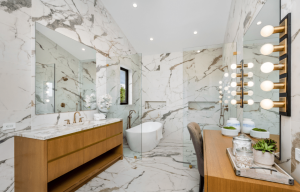
There’s nothing quite like it, is there? Walking into a kitchen and seeing those fresh, sweeping veins of Carrara or Calcutta marble stretched across the benchtops. It’s an instant showstopper.
But nature’s most elegant stone hides a frustrating secret. It drinks up everything.
Marble, which is mainly composed of calcium carbonate, is actually very porous, similar to a sponge. Just a small spill of wine could cause a permanent stain. Add Melbourne’s wild weather to the mix? You’re in for a tough time. Biting coastal salt and notoriously hard water, packing 100-200 mg/L of calcium carbonate, means water rings and dull spots show up 30-50% faster here than in milder climates.
That’s why ignoring marble sealing in Melbourne is a recipe for heartbreak. You simply have to protect it.
Stains vs. Etch Marks: Setting the Record Straight
Before we go any further, let’s clear up a mix-up I see all the time. Stains and etch marks are completely different animals.
Imagine a stain as an unwanted visitor. You can easily see the oil or the coffee poured on the stone, and it will hide in the microscopic open pores. Etching- this is the real physical damage.
Food acids such as tomato sauces, lemon juices or even more around the house bathroom soaps will literally eat into the top layer of the stone whenever they touch. You end up with a dull, rough patch that, although it looks like a water ring, will in fact never come off, whether scrubbed or not.
Here’s the catch. A great seal puts the brakes on stains by keeping liquids on the surface longer. It won’t, however, make your benchtops bulletproof against acid etching.
Penetrating Sealers vs. Surface Coatings
So, how do you actually guard your stone?
You essentially have two choices. And picking the right one is the only way you’ll experience the real benefits of sealing natural stone surfaces without doing more harm than good.
- Penetrating Sealers: These are the absolute gold standard. Rather than sitting on top, they sink below the surface and line the pore walls to aggressively repel water and oil. The massive perk here is that the marble can still breathe, letting vapour escape.
- Topical Coatings: Imagine shrink-wrapping your benchtop. A plastic-like film sits right on top, physically blocking both stains and acid. Sounds brilliant, right? Not so fast. These films can trap moisture, peel off in ugly chunks, and turn a nasty yellow under UV light. Down the track, you’ll be forced to use harsh chemical strippers just to get rid of them.
The 10-Minute Water Test
Do you think your current protection may be outdated? You can easily check it by doing a water test that only takes 10 minutes.
All you need to do is add a few drops of water onto the benchtop surface and wait for ten to fifteen minutes.
If the water is beading on the surface, like water on a freshly waxed car, you’re doing well. The protective layer is still there. Though if the water gets absorbed and leaves behind a dark, almost scary patch, then without a doubt, it is the right time to reseal. Also, watch out for other hints like a rough surface, a constant appearance of new stains, or a sudden loss of shine.
DIY or Call the Pros?
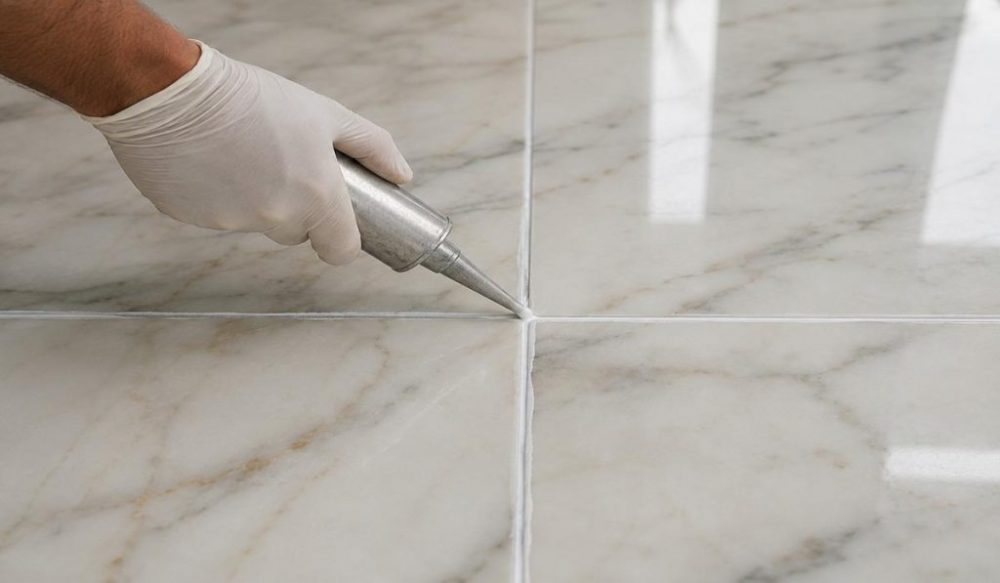
Sealing the stone on your own might be a great way to cut down the price.
But really? It can be tricky and even hazardous. If you select an unsuitable product, apply an excessive amount, or reduce the drying time, you will end up with a sticky residue and a haze that will keep the moisture trapped in the stone.
Making a brave decision and reaching out to local specialists is usually the wisest thing to do. Pros can get hold of commercial-grade products that penetrate deeper and have a shelf life that is 2-3 times longer than the ones you find at the hardware store. Plus, if your stone has already copped a serious beating, professional marble restoration in Melbourne can literally grind away the damage and polish it back to a factory finish.
Your Year-Round Maintenance Rhythm
You can really keep your marble stunning with minimal effort. All you need is to find your personal style and rhythm.
- Every Day: Clean up any spills right away. Always place a drink on a coaster. Wipe surfaces using tepid water and a pH-neutral detergent; strongly avoid bleach and vinegar.
- Every Week: For the truly diligent, a very thorough cleaning can be done in those hard-to-reach areas, like the sink and kitchen.
- Every Year: Check the results of that water-drop experiment. A very active kitchen may require sealing every 3-6 months, whereas the family bathroom’s floor may be fine for 12-18 months between sealing or top-up.
Final Thoughts:
It’s really all about persistently taking care of natural stone. Follow the habits, don’t miss the signs, and marble will be a source of beauty for a very long time.