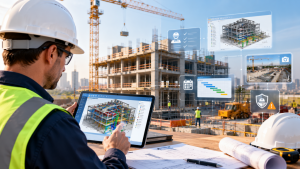
Top Benefits of ERP Software for Real Estate Developers and Builders
Real estate development looks simple from the outside. But anyone working in this field knows how complex it becomes once multiple projects start running.
Developers manage land acquisition, approvals, contractor coordination, budgets, sales inquiries, and customer communication. When all these tasks run through different tools, confusion starts appearing.
I have seen developers managing their projects through spreadsheets, emails, accounting tools, and separate customer databases. At first it works. However, once projects grow bigger, teams start losing track of information.
This is why many developers now rely on an erp solution for construction industry. It brings project data, finances, and customer information into one system. Similarly, when teams connect ERP with construction CRM software, sales and project operations start working together instead of operating separately. In this article, we will talk about the real benefits builders and developers see when they adopt ERP software.
Why Real Estate Developers Face Operational Confusion Without Integrated Systems
Real estate projects involve many departments.
For example:
- Sales teams manage buyer data in one system
- Finance teams track payments in another tool
- Project teams manage construction updates separately
- Management tries to combine everything through reports
Similarly, teams spend hours searching for information.
An erp solution for construction industry connects these departments and allows them to work from the same data environment.
As a result, developers gain better control over projects and finances.
Well Managed Project Management Improves Control for Builders
Developers need to track:
- Construction progress
- Contractor performance
- Material purchases
- Budget utilization
Without proper software, teams rely on manual updates.
However, an erp solution for construction industry centralizes this information.
Project managers can check progress inside the system. Finance teams can see spending in real time.
Similarly, management can monitor all projects through one dashboard.
Instead of collecting updates from different teams, they view everything directly in the ERP platform.
Faster Financial Tracking Across Construction Projects
Finance management becomes difficult when developers run several projects simultaneously. Without integrated software, finance teams often prepare reports manually.
In comparison to manual tracking, an erp solution for construction industry connects financial records directly with project activities.
This means:
- Purchase orders automatically reflect in project budgets
- Contractor payments update financial reports instantly
- Management sees cost variance earlier
Likewise, developers gain better visibility into their overall project profitability.
Sales Teams Work Better When Connected With construction CRM software
Real estate developers depend heavily on sales performance.
However, many companies separate their sales system from project management tools.
This often creates confusion.
For example:
- Sales teams confirm bookings
- Finance teams wait for payment confirmation
- Project teams may not know unit allocation updates
When developers integrate construction CRM software with their ERP platform, these gaps disappear.
Sales teams record leads and bookings. Similarly, finance teams track payment schedules linked to those bookings.
Project teams also see which units are sold and which remain available.
This connection improves coordination across departments.
How an ERP System Helps Developers Control Construction Budgets
Developers who rely on manual tracking often detect budget issues too late.However, an erp solution for construction industry provides real time cost tracking.
Managers can monitor:
- Material procurement costs
- Labor spending
- Contractor billing
- Equipment expenses
In the same way, ERP dashboards show budget variance across projects.
This early visibility helps companies control overspending.
Real Estate Developers Improve Communication Across Teams
Large construction projects involve many teams.
Developers coordinate with:
- Architects
- Contractors
- Procurement teams
- Finance departments
- Sales staff
Without centralized software, communication gaps appear frequently.
However, an erp solution for construction industry allows teams to share updates through a common system.
For example:
- Procurement teams upload purchase orders
- Site engineers update project progress
- Finance teams approve payments
Similarly, management sees the full picture without requesting reports from every department.
Managing CRM Becomes Easier With Integrated Systems
Customer communication is critical for developers.
Buyers often want updates about:
- Payment schedules
- Construction progress
- Possession timelines
If information is scattered across systems, sales teams struggle to provide clear answers.
However, when companies connect ERP with construction CRM software, customer data becomes easier to manage.
Sales teams can track:
- Lead sources
- Booking status
- Payment history
- Customer queries
Likewise, customer communication improves because information remains organized.
Document Management Becomes Organized for Builders
Construction projects generate huge numbers of documents.
Developers deal with:
- Contracts
- Approval documents
- Vendor agreements
- Site drawings
- Compliance records
When teams store these documents in different folders or emails, finding them becomes difficult.
An erp solution for construction industry allows companies to store project documents in one place.
This makes it easier to access files whenever needed.
Similarly, teams avoid confusion caused by outdated document versions.
Real Time Reporting Helps Developers Make Faster Decisions
Developers constantly need accurate data to make business decisions.
They review:
- Project cost reports
- Sales performance
- Cash flow projections
- Construction progress
When these reports require manual preparation, decision making slows down.
However, an erp solution for construction industry generates reports automatically.
Managers can quickly view:
- Project budgets vs actual costs
- Unit sales performance
- Vendor payment status
- Inventory usage
Likewise, decision making becomes faster and more reliable.
Procurement Planning Becomes More Efficient With ERP
Material procurement plays a major role in construction timelines.
Delays in ordering materials can slow down entire projects.
However, an erp solution for construction industry connects procurement with project planning.
Project managers estimate material requirements.
Procurement teams then create purchase orders inside the same system.
Similarly, finance teams see the financial impact immediately.
This coordination reduces procurement delays and keeps projects moving forward.
Developers Gain Better Visibility Across Multiple Projects
Real estate developers often manage many projects across different locations.
Without centralized software, monitoring these projects becomes complicated.
However, an erp solution for construction industry provides a unified dashboard.
Management can review:
- Construction progress for each project
- Budget utilization across sites
- Contractor performance
- Sales performance
In comparison to manual tracking methods, ERP gives developers clearer visibility into operations.
Improved Payment Tracking for Buyers and Contractors
Real estate businesses deal with multiple payment flows.
Developers receive payments from buyers. They also pay contractors, suppliers, and consultants.
Without integrated systems, tracking these payments becomes difficult.
However, an erp solution for construction industry keeps payment records connected with project and customer data.
Developers can easily track:
- Buyer installment payments
- Contractor invoices
- Vendor payment schedules
Similarly, integration with construction CRM software helps sales teams monitor customer payment progress.
This reduces confusion between finance and sales teams.
Builders Can Scale Their Operations Without Operational Chaos
When developers expand their projects, operational complexity increases quickly.
More projects mean:
- More contractors
- More procurement activity
- More customer transactions
- More financial data
If systems are not centralized, teams struggle to manage this growth.
However, an erp solution for construction industry helps developers handle expansion smoothly.
Instead of adding more software tools, they manage everything within one system.
Similarly, they can connect sales processes through construction CRM software to keep customer management organized.
This combination supports long term growth.
Final Thoughts
Developers manage construction work, financial operations, customer sales, and regulatory processes at the same time.When companies rely on disconnected tools, these operations become difficult to manage.
An erp solution for construction industry helps developers centralize project management, financial tracking, procurement, and reporting.Similarly, integrating construction CRM software allows sales teams and project teams to work with the same information.
Over time, developers notice several improvements:
- Clearer project visibility
- Faster financial reporting
- Better team coordination
- More organized customer management
Admittedly, implementing ERP requires planning and training. But once teams start using it properly, their daily operations become much smoother.For developers planning long term growth, adopting an erp solution for construction industry often becomes one of the most important technology decisions they make.