Remote Work and Home Office Design Trends That Boost Productivity in 2026
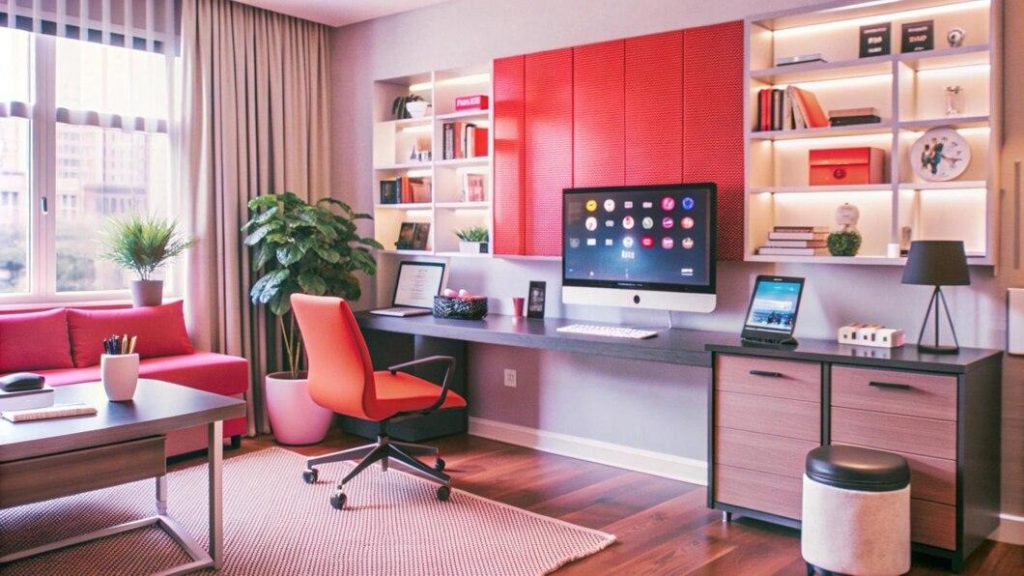
If we look back a few years ago, working from home meant balancing a laptop on the dining table, half-dressed, and hoping no one walked past during a meeting.
Now, fast forward to 2026. And things look very different. There is no doubt that workplace change, remote work, is now part of our everyday life. Honestly, even the homes are being designed, bought, and sold with this reality in mind.
Today, a home is not just a place to relax or work. Instead, for many people, especially the GenZs. Therefore, that shift has changed what buyers look for, how homeowners design their spaces, and how real estate value is perceived.
Having a well-thought-out home office is no longer a bonus feature. Instead, it is an expectation. Come on! Let’s dive deep into different home office design trends that are taking over in 2026.
Why Home Offices Have Become a Deal-Maker in Real Estate
If you scan property listings now, you will notice something interesting.
Well, what?
More homes now proudly mention “dedicated home office,” “study room,” or ‘work from home space.” And that is not by accident if you are thinking that.
Buyers are now more interested in having homes that fit their lifestyle. And since remote or hybrid work is a huge part of that, they are more keen on investing in different home-office designs.
Moreover, they want a house that already supports focused work and instantly feels more practical and is future-proof. If we look at the buyer’s point of view, having a proper office space means:
- Fewer renovations after moving in.
- Furthermore, better daily routines.
- A clearer separation between work and personal life.
If we look at the seller’s point of view, it means higher interest, better presentation and often stronger offers.
From Makeshift Corners to Real Workspaces
One of the biggest changes we are seeing in 2026 is the move away from the makeshift setups. No more working on the bed. No more taking up countertops because you don’t have an office.
People no longer want to squeeze work into awkward corners of their homes.
Instead, they are:
- Looking to turn their space bedrooms into offices
- Using basements or attics more cleverly.
- Also, creating partitioned spaces in open-plan homes.
If you look at the new small apartments now, they have a very clever layout. This allows quite focused work zones. And in the real estate, this thoughtful planning makes the property stand out in front of the buyers.
Comfort Is Productivity
Anyone who has done the 9-to-5 shift from an uncomfortable chair knows how quickly productivity drops. That is why ergonomics has become a major selling point in home office design.
Also, the buyers are paying attention to different things, like:
- Natural light
- Space for adjustable desks and chairs
- Proper room proportions
- Good ventilation
Homes that make it easy to work comfortably feel more loveable. Also, that emotional response matters when people decide whether a house feels right.
Privacy and Quiet Are Non-Negotiable Now
Let’s be honest: Excessive noise can ruin a workday. Video calls, deadlines, and even focused tasks all demand quiet. Real Estate knows this. Therefore, they are working on providing the features that focus on privacy.
From offices away from living rooms to solid doors instead of open areas, wall treatments and windows away from the streets, they are providing such features.
In shared households, this matters even more. A quiet, closed-off workspace can be the difference between stress and productivity. This directly affects how valuable a home feels.
Tech-Ready Homes Are the New Standard
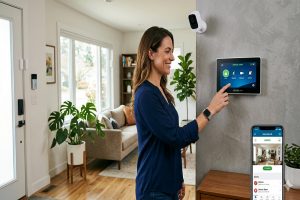
In 2026, a home office without proper tech support does not work. Fast internet, enough power outlet and smart layouts are no longer luxury features. Instead, they have become the basic expectations.
Moreover, the buyers increasingly look for:
- Strong internet infrastructure
- Easy cable management
- Smart lighting and temperature control
- Enough plugs for modern devices.
Additionally, homes that support seamless technology feel modern and practical. Additionally, it instantly boosts the buyer’s confidence.
Homes That Adapt to Real Life
One of the smartest design trends right now is flexibility. People do not want spaces that only serve one purpose forever. Instead, they want rooms that can evolve.
A home office today might become:
- A study space
- A creative room
- A second work area for another family member
This flexibility is perfect for those who are juggling different opportunities. Like you can find many homeowners managing full-time jobs while even pursuing their education further.
Thus, in those cases, having a quiet, functional space matters. Whether someone is preparing presentations or creating study schedules, including the moments when they work alongside nursing assignment writers to manage academic pressure efficiently.
From a real estate perspective, Flexible spaces attract a wider range of buyers and make homes easier to market.
Looks Matter Even If We Don’t Think So
The truth is that the productive workspace does not need to feel boring. In fact, the design plays a huge role in how motivated people feel.
In 2026, buyers love home offices that feel:
- Clam but not dull or depressing
- Clean but not empty
- Stylish yet not too distracting.
Therefore, they go for the neutral colors and natural textures, plants and clutter-free layouts all help create an environment where people actually want to work. Homes that get this balance right feel instantly more appealing during the viewings.
It’s Not Just the Home — It’s the Area Too
When people work from home, the surrounding neighborhood suddenly matters more. Buyers are thinking beyond the walls of the house. Instead, they care about:
- Quiet streets
- Reliable utilities
- Nearby libraries or co-working sports
- Cafes for a change of environment.
Thus, this is especially essential for people relocating. Also, settling into a new city while managing work or study can be overwhelming and access to supportive environments makes life much easier.
Some residents balancing coursework may also depend on external academic resources, such as nursing essay help while adjusting to new routines. This makes the peaceful, well-connected neighborhoods even more valuable.
Wellness and Sustainability Are Part of the Conversation
People are now spending more time at home. Hence, they now want the design that keeps their mental health stable. Hence they now look for the features with good lighting, preferably natural and airflow.
This allows people to stay in their homes and work without any problem.
What This Means for Sellers and Investors?
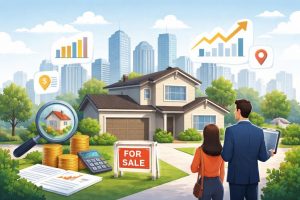
If you are a homeowner who is planning to sell, even a small office upgrade can make a big difference. Imagine better lighting, clear space, or built in storage. All of this can help buyers instantly picture themselves working here.
Similarly, for investors, it is a heaven. The properties with remote work lifestyles can be a smart long-term bet. As flexible work continues, demand for functional homes is not going anywhere. Thus, it is essential to understand how people live and not just where they live.
Final Thought
This brings us to the end of the guide! Honestly, there is no doubt that the way we work has changed. And with that even our homes have changed with it. In 2026, a home office is not just a room with a desk.
Instead, it is a reflection of how people balance their comfort and daily life.